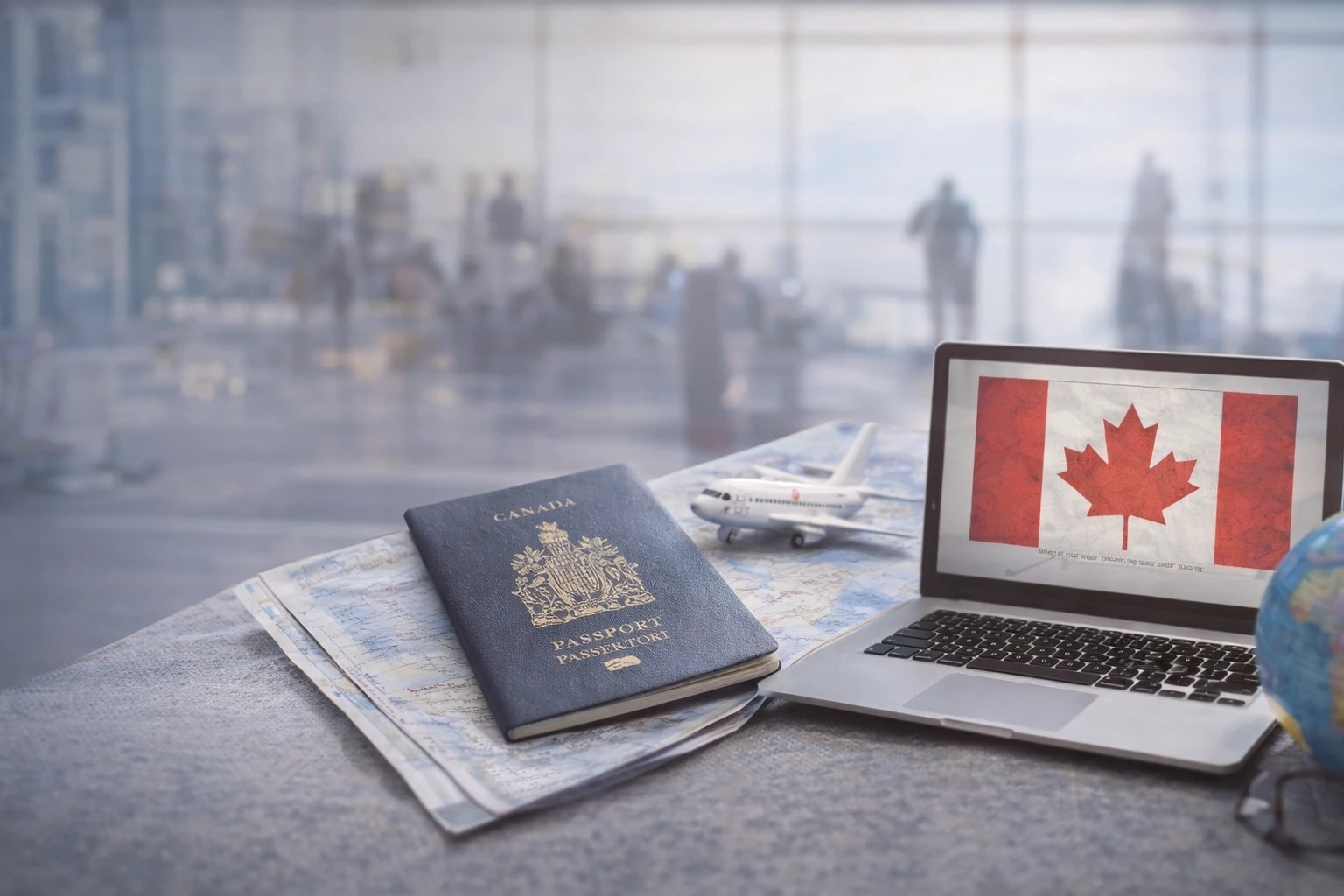
Canada is one of the top choices when it comes to international education from around the world. It comes with many benefits and opportunities as to why to study in Canada. Foremost, it offers high quality education at a relatively affordable cost in a safe, stable, and multicultural society. It also enables you to work during your studies and obtain a work permit after your studies as long as you meet the Canadian government’s criteria. Gaining work experience in Canada after your studies provides you with more opportunities to settle in Canada as a permanent resident.
How many Universities and colleges are there in Canada?
There are over 1,500 universities, colleges, and other educational institutions that are authorized by Immigration, Refugees and Citizenship Canada (IRCC) to welcome international students. These educational institutions are called designated learning institutions (DLIs) and they exist to help international students learn in Canada and stay in the country after graduation with a Post Graduation Work Permit (PGWP).
How can I study in Canada?
Foremost, choose an academic program that resonates to your interest and goals.
Apply with Designated Learning Institution (DLI) and obtain a Letter of Acceptance (LOA).
Apply for student permit.
What is a Canada Study Permit and how do I apply for it?
Canadian Study permit is a document issued to international students who applied to study in Canada. This document grants legal authorization to the applicant to study in Canada with certain conditions. However, when applying for a permit, be aware of the requirements when submitting the application for study permit in order to avoid refusals due to incomplete submissions.
In order to obtain a Canadian study permit, a prospective foreign student must:
Have obtained a Letter of Acceptance (LOA) from a Designated Learning Institution (DLI) in Canada.
Show proof of an adequate fund to cover tuition fees and other living expenses.
Prove to the Canadian immigration officer that will leave Canada at the end of their authorized stay.
Be admissible to Canada. In other words, they must have a clean criminal and/or medical records. The applicant may also be required to provide a police certificate to prove their status.
What is Designated Learning Institution (DLI)?
To apply for a study permit, you need an acceptance letter from a designated learning institution (DLI). A DLI is any school that can admit international students. All primary and secondary schools in Canada are DLIs. However, post-secondary institutions require approval from the provincial government to admit international students and be considered as DLI.
How to verify the DLI status of a university or school?
To avoid the stress of applying to a college that does not have a DLI status, you need to verify the DLI status of the school before applying. You can do this by:
Visit the IRCC website to validate the status of the university and its DLI numbers.
All post-secondary institutions in Canada that are eligible to admit international students will have a unique DLI number. This will begin with the letter “O” and can be found on the Study Permit application form.
Reason why I should choose DLI?
There are essentially three reasons to choose a Designated Learning Institution (DLI) in Canada. They are as follows:
The federal government or an agency administers DLI colleges in Canada.
They meet all provincial regulations for providing higher education in Canada.
The degrees and diplomas awarded by DLI universities in Canada are recognized worldwide.
If you are planning to come to Canada for a post-secondary education, then you must ensure that the institution you are interested in is eligible to admit international students. Graduation from certain DLIs will also allow you to apply for a Post-Graduation Work Permit (PGWP) after the completion of your study program.
How can international students change their study programs?
If you change your study program within the same DLI, then there is no need to apply for a renewed or extended study permit. If you change post-secondary schools, the school you plan to change to must also be a DLI. Please check the DLI list and confirm your new school is a DLI before you commit to changing schools.
You don’t need to apply to change your study permit if you are changing schools.
Post-secondary studies include:
university
community college, CEGEP, institute
private university, career college, academy, school or training institution and
ESL/FSL and other language training.
How do I know if the location for me is appropriate?
The following are the many factors that help you decide which city to consider for your studies.
Which educational program to pursue
Job opportunities available with that specific program
Familiarity with relations and friends who can help and guide you with settlement
Weather
Budget
What are my options for accommodation?
There are a variety of options for international students with regards to accommodation. Foremost, it can be offered by the institution or DLI they are going with. The following are additional options available depending on the budget and preference of each student:
On campus accommodation (this is a convenient options taking into consideration the proximity of the school and weather)
Off campus accommodation (rental from private landlords with added utility expenses. Rental prices differ each province from 1 bedroom or renting the whole floor or place)
Hosted by family or friends
Short term rentals (anywhere from a few days to a one semester)
Long term rentals (anywhere from a semester to full year or up until study is completed)
It’s very important to start your search early as a major part of your student journey will be decided as per your accommodation which will prioritize your comfort and safety in addition to your monthly expenditures on travel time, your schedule for attending classes and many other necessary activities such as grocery, shopping, recreation etc.
Can I work while studying?
As of November 2022, students working in Canada will have fewer restrictions on working hours as announced by the Honorable Sean Fraser, Canada’s Minister for Immigration, Refugee and Citizenship Canada (IRCC). Students now can work up to 40 hours as compared to 20 hours, giving the international students a far better ability to support themselves while studying. This also massively affects the type of jobs and opportunities students can avail to supplement their income while studying.
You may be eligible to work in Canada while studying, if your study permit includes a condition that says you can work on or off campus. You must also meet all the other requirements. You can only start working in Canada when you start your study program. You can’t work before your studies begin.
If you’re able to work during your studies, it’ll say so in the conditions on your study permit.
If you’re eligible for off-campus work, you don’t need a work permit.
What is my eligibility requirement to work off campus?
You can work off campus without a work permit if you meet all of these requirements:
If you’re a part-time student at a DLI
You can work off campus only if:
you meet all of the requirements above, except the requirement to be a full-time student, and
you’re only studying part-time, instead of full-time, because:
you’re in the last semester of your study program and you don’t need a full course load to complete your program and
you were a full-time student in your program in Canada, up until your last semester
If you’re on an authorized leave from your studies, or you’re switching schools and you’re not studying, you can’t work off campus. You can only return to work once you’re back to studying.
What Social Life does an international student have in Canada?
Meeting new people in a foreign country can be overwhelming for some. Most universities and colleges in Canada usually have an orientation week to help students get to know the campus and their classmates. There are also various online international student communities and cultural and social get-togethers, which are great ways to meet people and get involved in the community.
What is the age limit for a student to study in Canada?
There is no age limit to study in Canada.
What is the approximate cost of living to study in Canada?
A rough estimate on the cost of living for an international student, living and studying in Canada for a whole year is depicted below over some common expenses every student is challenged with. The following grid is an approximation of a student’s cost of living in Canada each must take into consideration:
Accommodation
$7800 – $14,000
Food
Min. of $3600 ($300/month)
Clothing
$1500 – $2000
Local Transportation
$1440 ($120 per month for bus)
Miscellaneous
$1200 – $2400
Books, Supplies and Instruments
$1000
University Health Insurance Plan
$756 ($63/month approx.)
Total
$17,296 – $26,856
A rough estimate on the cost of living for an international student, living and studying in Canada for a whole year is depicted below over some common expenses every student is challenged with. The following grid is an approximation of a student’s cost of living in Canada each must take into consideration:
Accommodation
$7800 – $14,000
Food
Min. of $3600 ($300/month)
Clothing
$1500 – $2000
Local Transportation
$1440 ($120 per month for bus)
Miscellaneous
$1200 – $2400
Books, Supplies and Instruments
$1000
University Health Insurance Plan
$756 ($63/month approx.)
Total
$17,296 – $26,856
Do I have health coverage as a student?
Canada’s health care system varies from province to province. Foreign nationals planning to study in the country should familiarize themselves with the Canadian health care offered by their province of study. Some provinces do cover international students under provincial health insurance plans, but most require students to register for private health insurance plans.
Those in Canada without permanent resident or citizen status should expect to pay out-of-pocket for medical services unless they have private health insurance. In fact, many immigration programs require temporary residents to secure private health insurance for the duration of their stay in Canada. Temporary residents have several options for this:
They can purchase private insurance from an insurance company.
If they are working in Canada, they may receive health insurance from their employer.
If they are studying in Canada, they may register for insurance through their school.
Can I bring my family to Canada while studying?
Yes. You may bring your spouse, common-law partner, and dependent children.
The government of Canada, not to mention the university or college you are attending, prioritizes the mental and emotional stability of their students while studying in Canada. Consequently, you can have your spouse/common-law partner join you in Canada, as well as any dependent children. Your spouse/partner can apply for an open work permit, allowing him or her to come to Canada and work for any employer, while your children may also join you.
What is PGWP?
The Post-Graduation Work Permit (PGWP) is an open work permit issued to foreign students who have graduated from a Designated Learning Institution (DLI).
It allows you to gain work experience in Canada and can help you become eligible for a variety of federal and provincial immigration programs (which sometimes require that candidates have qualifying Canadian work experience to become eligible for a given program).
The PGWP is valid for a period equivalent to the program of study you completed in Canada. Its duration can range from a minimum of 8 months to a maximum of 3 years depending on the length of the study program undertaken.
How do I qualify for PGWP?
To be eligible for the PGWP, you must have held full-time student status at an eligible Designated Learning Institution in Canada, and you must have met all the requirements of your program of study that was at least eight months in duration.
What is a Student Direct Stream?
The Student Direct Stream (SDS) is a program that expedites the processing of study permits for candidates who meet eligibility requirements. One of the eligibility requirements is that you must be a legal resident of one of the following countries:
Antigua and Barbuda
Brazil
China
Colombia
Costa Rica
India
Morocco
Pakistan
Peru
Philippines
Senegal
St. Vincent and the Grenadines
Trinidad and Tobago
Vietnam
How do I become eligible for SDC?
To be eligible for the SDS, you must:
Be a legal resident of Antigua and Barbuda, Brazil, China, Colombia, Costa Rica, India, Morocco, Pakistan, Peru, Philippines, Senegal, St. Vincent and the Grenadines, Trinidad and Tobago, or Vietnam.
Have completed a valid language test in the last 2 years, with an IELTS score of 6.0 or higher, or a TEF score equivalent to the Canadian Language Benchmark (CLB) of 7 or higher.
Have a Guaranteed Investment Certificate (GIC) of at least $10,000 insured by the Canadian Deposit Insurance Corporation (CDIC). The GIC must meet specific criteria.
Prove full payment of your tuition fees for your first year of study.
Provide a letter of acceptance from the institution.
Provide your most recent secondary or post-secondary transcripts.
Get a medical exam before you apply if required. You may need this if you have lived or travelled to one of the designated countries before coming to Canada, or if your field of study requires it.
Get a police certificate before you apply if required in your case (your visa office instructions will tell you if you need to get a police certificate)..
Do I need to take a language test to study in Canada?
You do not need a language test to apply for a study permit, but you may be asked for one by the institution you are applying to. For more details, please review the policies of the academic institutions you are interested in applying to.
What are my responsibilities as an international student in Canada?
Once you have been approved for a study permit, you must fulfil the following conditions established by the Canadian government:
Remain enrolled at your designated learning institution
Work towards completing your program
Fulfil all conditions listed on your study permit
Stop studying if you no longer meet your study permit requirements
Leave Canada when your study permit expires (unless you have obtained another temporary permit or permanent residence)
Your study permit will become automatically invalid if you violate any of the conditions listed on your study permit.
What are the differences in study levels, and between colleges and universities and designated learning institutions in Canada?
Universities: They offer undergraduate, professional, and postgraduate degrees, in addition to certificates and diplomas.
Community Colleges: They offer certificates, diplomas, associate degrees, undergraduate degrees, and postgraduate diplomas.
Career and Technical Colleges: They offer certificates and diplomas for technical training meant to help adults advance in their careers.
What is the application deadline for DLI in Canada?
All DLIs have their deadlines. It all depends on the institute’s program, faculty, or department you are
applying for. They will have all the necessary information on their websites.
What is the Nigeria Student Express Program (NSEP)?
Launched as a pilot in 2020 by Immigration, Refugees and Citizenship Canada, the Nigeria Student Express aims to reduce the study permit processing times for eligible Nigerian students.
To be eligible for faster processing through the NSE, you must:
Apply online
Be a Nigerian citizen or legally reside in Nigeria
Have an acceptance letter from a post-secondary designated learning institution in Canada for a Bachelor’s, Master’s or PhD degree program or a post-graduate diploma course
Live outside of Canada when you apply
Have a MyBank certificate showing sufficient funds for your studies (equivalent of CAD $30,000) for at least six months PLUS 12 months of banking history
Get a medical exam before you apply
Have a language test result that shows:
a score of 6.0 or higher in each skill (reading, writing, speaking, and listening) on the IELTS, or
a Test d’évaluation de français (TEF) score that is equal to a Canadian Language Benchmark (CLB) score of at least 7 in each skill (reading, writing, speaking, and listening)
Only if you’re applying to study in Quebec, have a certificat d’acceptation du Québec (CAQ) from the Quebec government
What are my possibilities of getting Permanent Resident after studies and PGWP? How long will this whole process take?
More international students are transitioning to become immigrants of Canada each year since many of Canada’s federal and provincial immigration programs reward international students with extra points and/or provide them with dedicated application streams. According to the most recent federal government statistics, over 50,000 international students become permanent residents each year.
Things that need to be looked into:
Hcaptcha
Online payment
Logo of CICC on every page
Please delete the “Why Us” section
Requesting the change of pictures to more landmarks of Canada instead of random people